Growing up as a child, I often wondered why my mother did not work in the public sector. With her level of education at the time, she could easily have secured a respectable secretarial job. But my father, deeply in love with his beautiful wife, would not allow it.
My mother was a strikingly beautiful Anlo woman — fair, elegant, graceful, with every feature perfectly proportioned in a way that could turn heads anywhere she went. My father, also an Anlo man, loved her so deeply that he feared the outside world might “steal” his treasure away from him. And so, he chose to carry the full responsibility of caring for the family himself.
And he did it lovingly.
Passionately.
Sacrificially.
But the beautiful thing was that my mother loved him just as deeply. The affection between them was genuine, warm, and admirable. Growing up, we watched two people who truly loved each other, respected each other, and enjoyed each other’s company. Their marriage became a model for us, a living example of companionship, loyalty, sacrifice, and friendship. Even today, the love they shared continues to inspire us in our own marriages and relationships.
Then death happened.
Death, that cruel reality that never asks whether you are ready.
My father, who worked at the Bank of Ghana, was taken away from us at only 48 years old. The news of his passing came as a shock and total disbelief to all of us.
One moment, we had a loving father and stable home; the next moment, our world came crashing down.
There stood my mother, widowed at 41, left with five children to care for, the youngest barely five years old.
Life has a way of forcing responsibilities upon you whether you are prepared or not. My mother quickly wore both robes, father and mother and carried them with strength, dignity, and courage.
I had just entered secondary school and was only in my second week when my father passed. I was the third born, and I must confess, Daddy was my favourite. At the time, I thought my mother was too strict, too disciplined, too hard. I sometimes even questioned whether she truly loved me.
But life has a way of opening your eyes.
I watched this woman do almost every imaginable job just to keep five children alive, fed, clothed, and educated. In fact, I often say jokingly that the only thing left for my mother to sell was human beings.
She travelled tirelessly between Accra and Togo by road to buy jewellery for sale. She journeyed to Juapong and several villages to trade in beans, gari, cassava dough, goats, and other food items. She sold second-hand clothing. She operated a chop bar. She sold akpeteshie, the local gin many people looked down on women for selling.
But the one business that earned my deepest respect was the yam trade.
My mother travelled all the way to northern Ghana to buy yam. She once narrated how she would sit for hours on a bicycle not a motorbike, but an actual bicycle from the main town to farming communities because the only truck that served those villages came once every two weeks.
Imagine that.
A widow with five children.
Travelling for hours on rough roads on a bicycle just to place orders for yam.
Then riding back again.
Then enduring another long journey to Accra.
And after all that, waiting almost three weeks for her goods to arrive before she could finally sell them.
Sometimes the yams would spoil.
Other times they would never arrive.
Sometimes she would lose money completely.
But she never gave up.
Not because life was fair to her.
Not because she had options.
But because she had children to raise.
Children whose future depended entirely on her determination to survive.
After all these struggles, my mother even ventured into running a communication centre in the days before mobile phones became common when people queued to make calls using landlines.
I remember her selling some of her expensive belongings just so we could remain in school.
There was a painful time during my years at the polytechnic when I had to delay reporting to school because my mother simply had no money to make even the initial deposit. I still remember seeing her lying quietly on the porch floor, deeply worried, wondering where she would get money from to pay my fees while still caring for all my siblings.
That image has never left me.
Today, by the grace of God and through the sacrifices of this incredible woman, all five of us have completed school. We are working, stable, and comfortable in life.
Not because life was easy.
Not because opportunities came freely.
But because one woman refused to give up.
One woman carried five destinies on her back and chose sacrifice over surrender.
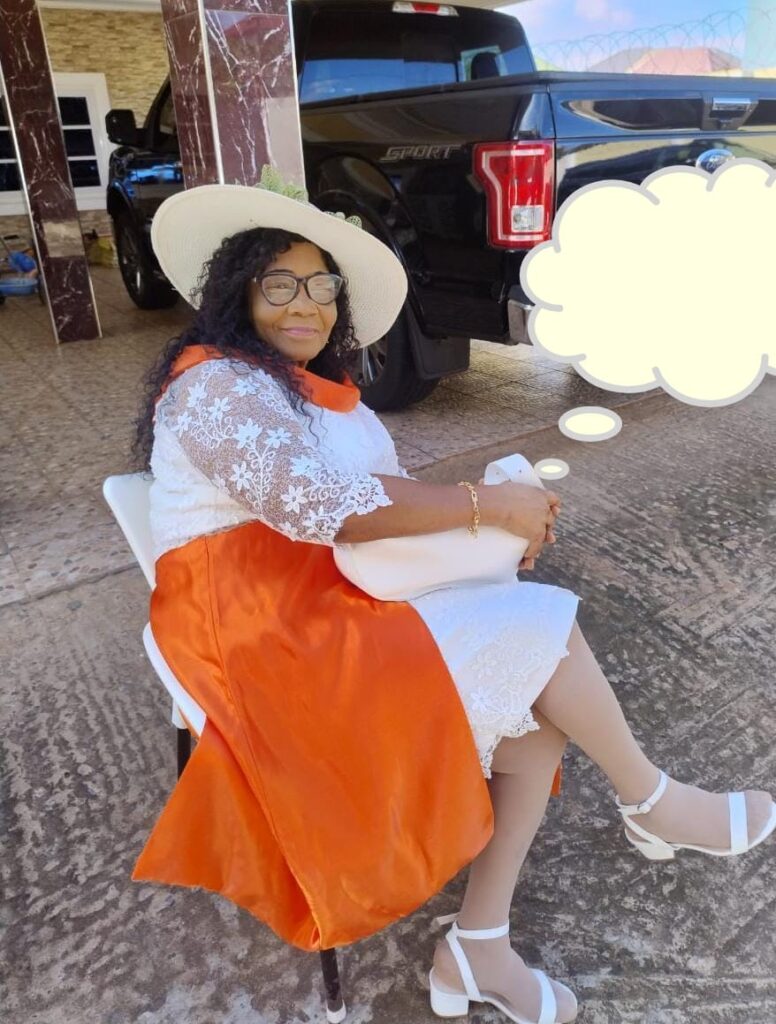
That woman is Mrs. Gifty Akpene Kpodo.
Ma, as I affectionately call you, we celebrate you today.
As you mark Mother’s Day and prepare to turn 70 next month, we want the world to know that your labour was not in vain.
Thank you for choosing us every single day of your life.
Thank you for refusing to abandon us when life became difficult.
Thank you for sacrificing your own comfort so we could have a future.
Thank you for loving us unconditionally.
Thank you for deciding not to remarry after Daddy’s passing because of your love for him and your commitment to raising your children.
Daddy died at 48.
You were only 41.
Yet for all these years, you dedicated your life entirely to us.
Even after we started working, you never stopped being our mother in every sense. You still washed our clothes, worried about our wellbeing, prayed for us, and loved us with everything you had.
Eiii, Akpene Kpodo…
Your strength is rare.
Your love is deep.
Your sacrifices can never fully be repaid.
On behalf of Sister Lebene, Fo Prosper, Enyonam, Selasi, and myself, we say thank you.
We love you dearly.
May God bless you with long life, good health, peace, and happiness.
Happy Mother’s Day, Ma.
And happy 70th birthday in advance.
Your children rise today because you refused to fall.
https://www.facebook.com/josephine.dake.3/And for that, we celebrate you forever.https://l.facebook.com/l.php?u=https%3A%2F%2Fyoutube.com%2F%2540LadyJosy%3Ffbclid%3DIwZXh0bgNhZW0CMTAAYnJpZBExano3Zkk4bXR5dmxmM2NMRHNydGMGYXBwX2lkEDIyMjAzOTE3ODgyMDA4OTIAAR7rKcjgPkLyWaaKKv3ebTu5Qb1GPGO_MsHoySRv0e8ARdXqT5oDO3LgD0tBvg_aem_a8UJVXtciqqYA8tbRNJ_dA&h=AUCiK4UcMJE7WucPPOMeKBfFeQbvetfVfuDveRb6p-tRRE3o_COEUsCMF7ulikvETBPSiFwHQKbVSm23fgyPb159NANOydFU8HBAwVj3sCyiS8ZHJbFTDhdF-HQW4DN18w