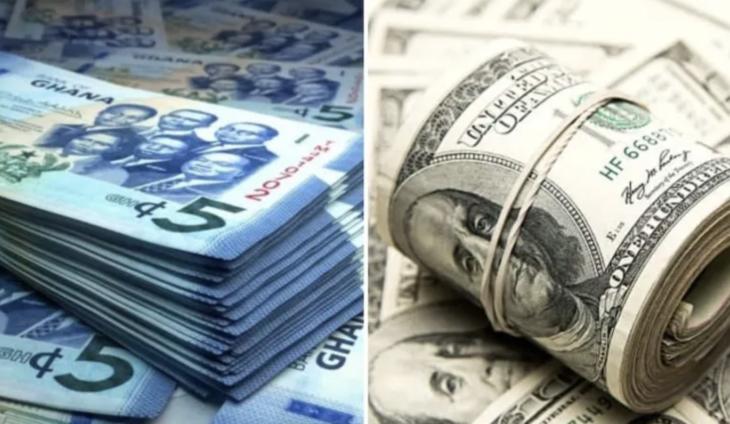
The Ghana cedi has continued its positive momentum, marking a second consecutive week of revival. This improvement in the Cedi’s performance is largely attributed to increased liquidity support provided by the Bank of Ghana. Several key factors are believed to be contributing to this strengthening of the national currency. The Bank of Ghana has taken measures to inject more liquidity into the banking system. This is aimed at reducing the pressure on the cedi by making more funds available in the economy, stabilizing the currency and providing relief to businesses and individuals impacted by previous fluctuating issuance of the Ghana Gold Coin (GGC) is one of the strategies employed by the Bank of Ghana to absorb excess liquidity and support the local currency. By offering gold-backed investment products, the central bank helps stabilize market expectations, enhancing confidence in the cedi and its ability to maintain value. The actions taken by the Bank of Ghana, such as its gold-backed initiatives and liquidity management, have helped boost investor confidence in the local currency. The expectation that the central bank will continue to manage the economy effectively has led to improved demand for the cedi. With a slight improvement in economic indicators, including more robust export performance and financial stability measures, the demand for the cedi has increased, helping to support its value against major foreign currencies. The continuation of the Bank of Ghana’s liquidity measures and economic policies. The global economic environment, including fluctuations in commodity prices and external factors, may impact the foreign exchange market. Inflation rates and interest rate adjustments may influence investor sentiment. The Ghana cedi’s revival for the second consecutive week highlights the effectiveness of the Bank of Ghana’s interventions and the growing confidence in the local economy. However, sustained efforts and a stable economic environment will be essential for maintaining this momentum. The Ghana cedi’s recent revival is primarily attributed to the Bank of Ghana’s actions, which have included a significant liquidity boost into the market. Here’s a breakdown of the cedi’s performance and the factors driving its improvement. The Bank of Ghana injected US$199.8 million into the market, which has helped alleviate some of the pressure on the cedi. This liquidity injection supports the currency by increasing the availability of dollars in the banking system, which is crucial for stabilizing exchange rates.
Additionally, there has been a foreign exchange inflow of US$21.55 million from market participants. These inflows, combined with the central bank’s efforts, have contributed to the Cedi’s strengthening. The cedi appreciated by 1.42% week-on-week against the US dollar. It also gained 3.03% against the British pound and 3.36% against the euro, reflecting a broader improvement in its value relative to major foreign currencies. At the close of last week’s trading, the cedi was quoted at a mid-rate of GH¢16.79 to the dollar. The week began with the cedi trading at GH¢16.70 to the greenback, further highlighting the cedi’s recent recovery. Despite the recent gains, the cedi has still faced significant depreciation against the US dollar. For the year to date, the cedi has lost 27% of its value against the US dollar, reflecting the challenges the currency faced earlier in the year, largely due to inflationary pressures, external debt obligations, and other macroeconomic factors. The ongoing support from the Bank of Ghana, including its interventions and foreign exchange management, remains crucial for maintaining the cedi’s stability. While the cedi has made gains in recent weeks, its long-term performance will depend on external factors such as global economic conditions, commodity prices, and continued inflows of foreign currency. The Cedi’s performance will also be affected by domestic inflation rates and the Bank of Ghana’s interest rate policies, which can impact investor confidence and market demand for the Cedi. while the cedi has shown signs of recovery, especially in the last week, it remains under pressure from its significant losses earlier in the year. Continued liquidity support and favourable economic policies will be key to ensuring its stability moving forward. The International Monetary Fund (IMF) has provided a significant boost to Ghana’s economic outlook by hinting at the disbursement of US$360 million under the country’s Economic Credit Facility (ECF) program. The anticipated funds are expected to be released following the Board’s approval of the third review in early December 2024, and they come at a crucial time for Ghana’s economy.
One of the key program parameters that contributed to the IMF’s positive assessment of Ghana’s progress is the successful debt restructuring that took place earlier this year. This restructuring has alleviated some of the country’s debt burden, which in turn has helped restore investor confidence.
The debt restructuring, along with fiscal consolidation efforts, has positioned Ghana for better economic stability, making it more attractive to both domestic and international investors.
The US$360 million disbursement from the IMF will augment Ghana’s foreign exchange reserves, which is crucial for stabilizing the cedi and supporting the country’s balance of payments. These reserves can be used to meet the country’s foreign currency obligations, reducing the risk of further depreciation of the cedi and bolstering investor sentiment.
Analysts are optimistic that the IMF’s approval and the subsequent disbursement of funds will improve market sentiment. A more favourable market outlook, coupled with the increased availability of foreign exchange, is expected to ease pressure on the cedi. As investor confidence grows, demand for the cedi may stabilize, which could help it maintain or further appreciate against major foreign currencies.
The IMF funds will also support the government’s supply-side interventions, potentially boosting economic growth in critical sectors such as agriculture, industry, and infrastructure. This, in turn, can create a more favourable economic environment, supporting the cedi’s performance.
With the anticipated IMF disbursement and the positive effects of the debt restructuring, analysts expect the cedi to continue to gain in value in the coming weeks. As liquidity improves and Ghana’s economic fundamentals strengthen, the Cedi may see more stability and even further appreciation. However, challenges such as global economic conditions, domestic inflationary pressures, and commodity price volatility remain factors that could impact the cedi’s long-term performance. Additionally, the effectiveness of supply-side interventions will be critical to sustaining economic growth.
The IMF’s financial support, particularly the US$360 million disbursement, is a welcome development that is expected to support Ghana’s economic stabilization efforts and provide some relief for the cedi. With market sentiment improving and the country’s foreign reserves being bolstered, the cedi is likely to see a period of appreciation and reduced pressure in the coming weeks. However, sustained economic reforms and external factors will determine the currency’s performance over a longer horizon.