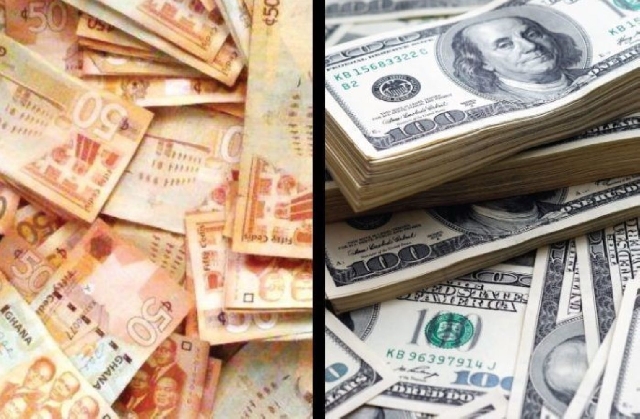
The Ghanaian cedi has started the week on a promising note, despite ongoing pressures from heightened demand for foreign currency, with the exchange rate sitting at GH¢17 to US$1. This marks a notable moment in the volatile and often unpredictable dynamics of the Ghanaian currency market, which has experienced significant depreciation in recent years. The cedi’s performance at the start of the week suggests some stability, despite the ongoing economic challenges faced by Ghana. The exchange rate of GH¢17 to US$1 reflects relative calm in the market, especially considering the volatility seen earlier this year. The week’s promising start may be attributed to a combination of factors, including improved foreign exchange inflows or a temporary easing demand for dollars. Despite the positive start, the demand for foreign currency remains a significant issue. Ghana’s economy has faced substantial currency pressures in recent years, driven by factors such as:
Ghana imports more than it exports, increasing demand for foreign currency to settle trade-related transactions. Ghana’s high external debt obligations also require large amounts of foreign currency, putting additional pressure on the currency. If there are concerns about the stability of the economy, foreign investors may pull their capital out of the country, adding to the demand for hard currency.
The cedi has been influenced by Ghana’s ongoing engagement with the International Monetary Fund (IMF), particularly after the country entered into a bailout agreement in 2022. While the IMF program is designed to bring fiscal stability, its impact on the currency is indirect, and market sentiment can be affected by perceptions of how effectively the government is implementing its fiscal reforms. The government’s policies on managing the currency, such as tightening fiscal policies, implementing a debt restructuring program, or encouraging remittances and exports, can help stabilize the cedi in the short term.
Although the cedi has shown some resilience, inflationary pressures remain a concern. The depreciation of the cedi has contributed to high levels of inflation, especially in food and fuel prices, making life more difficult for ordinary Ghanaians.
The high exchange rate also makes it more expensive for businesses to import goods, leading to higher prices domestically. These further fuel inflation and erode purchasing power.
While the cedi’s performance at the start of the week is positive, it’s important to acknowledge the volatility that could still lie ahead, especially if demand for dollars remains high or the global economic environment becomes more challenging. Changes in the price of oil (a key import for Ghana) or global interest rates (which affect capital flows), will continue to affect the strength of the cedi. could also play a role in currency stability. Any political uncertainty or changes in government policy could create market jitters and influence the exchange rate. The cedi’s performance of GH¢17 to US$1 at the start of the week is a positive development, but the underlying demand pressures and economic challenges remain significant. Factors like inflation, foreign currency demand, and Ghana’s ongoing fiscal adjustments under the IMF program will continue to influence the cedi’s value in the weeks ahead. While the government is making efforts to stabilize the economy, the currency market is still sensitive to both domestic and international economic shifts, which could introduce volatility moving forward. This moment of stability provides temporary relief, but market participants and everyday Ghanaians will likely remain cautious, aware that the situation could change quickly depending on how both local and global events unfold. The Ghanaian cedi has seen a modest improvement in its exchange rate, gaining 0.2% to GH¢16.33 per US dollar on the interbank market. However, on the retail market, the cedi is still trading at GH¢17.00 to the dollar, indicating a discrepancy between the rates offered to businesses and those available to the public.
The 0.2% gain on the interbank market signals some positive movement for the cedi, reflecting relative stability within the formal, regulated foreign exchange market.
The interbank rate is typically the rate at which commercial banks trade currency among themselves. This rate is often more stable and tends to reflect the market’s broader expectations about the strength of the cedi.
Despite the improvement in the interbank market, the retail rate—the rate at which individuals and businesses exchange currency at commercial banks, forex bureaus, or other outlets—is still at GH¢17.00 to the dollar. This higher retail rate shows that demand for foreign currency remains elevated at the grassroots level, and suggests that the market remains under pressure, particularly for consumers and smaller businesses.
The gap between the interbank rate and retail rate indicates ongoing market inefficiencies or limited access to foreign exchange for everyday transactions. While the cedi has gained on the interbank market, retail customers may still be feeling the impact of currency fluctuations. The Bank of Ghana (BoG) has taken proactive steps to stabilize the cedi by conducting targeted foreign exchange interventions. In the past week, the Central Bank held two foreign exchange auctions—a two-day and seven-day auction, through which it sold about US$214.04 million. This was the highest weekly auction amount this year, signalling a significant push to ease liquidity constraints in the forex market.
These interventions have helped to ease some of the demand backlog, which has been a major source of pressure on the cedi. By increasing the availability of US dollars to banks and businesses, the BoG aims to reduce the demand-supply gap that has fuelled the Cedi’s depreciation over the past few months. The success of these measures has been reflected in a moderated depreciation of the cedi. While the cedi has still weakened against the dollar, the rate of decline has slowed, which could be seen as a positive sign for the currency’s outlook in the short term.
The demand backlog in the forex market has been one of the major challenges facing the cedi. Businesses and institutions have struggled to obtain the foreign currency they need for trade and debt servicing, leading to a higher demand for dollars than the supply available on the market. By conducting regular foreign exchange auctions, the Bank of Ghana has sought to ease this backlog, helping to restore confidence in the local currency. As more foreign exchange becomes available, the pressure on the cedi can be alleviated, preventing more rapid depreciation.
The BoG’s intervention seems to be yielding some positive results, at least in the short term, as the cedi has shown a moderated depreciation compared to earlier in the year. The central bank’s auctions will likely continue to play a key role in stabilizing the cedi, although the retail market remains under pressure. The outlook for the Cedi will continue to depend on several factors. Global market conditions, including the price of oil (Ghana’s largest import), international interest rates, and the strength of the US dollar, will all affect the cedi’s performance. The government’s fiscal and monetary policies, as well as its engagement with the IMF for support, will have an ongoing impact on currency stability. The debt restructuring program and efforts to boost foreign exchange inflows will also play a significant role. Even with the intervention, the price of imported goods will likely remain high due to the cedi’s depreciation, continuing to fuel inflation. This will remain a challenge for Ghanaians, especially in terms of the cost of living. The Ghanaian cedi has gained a modest 0.2% to GH¢16.33 to the dollar on the interbank market, which indicates some short-term stability in the currency. However, the retail market rate remains at GH¢17.00, signalling persistent pressure at the consumer level. The Bank of Ghana’s proactive foreign exchange auctions, which raised over US$214 million, have helped ease demand pressures and moderate the depreciation of the cedi. While the situation remains volatile, these measures offer a temporary respite for businesses and the public, but the long-term outlook for the cedi will depend on broader economic factors and the government’s ability to address structural issues in the currency market.