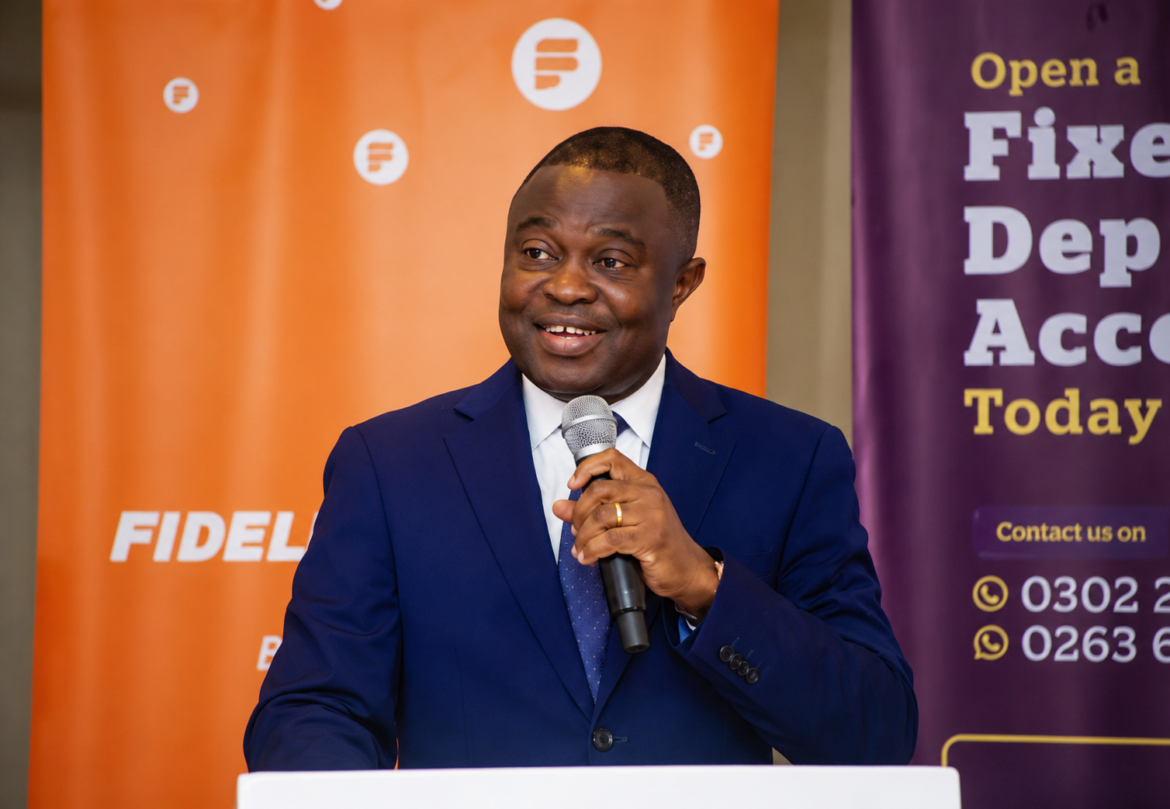
Atta Yeboah Gyan, Fidelity Bank Ghana’s Deputy Managing Director for Operations and Support Functions, wants Ghana’s financial sector to wake up. At the Business and Financial Times’ Money Summit 2026, he made a straightforward case: formal banks need to deliberately shift capital toward the sectors that power Ghana’s economy but remain starved of credit. His argument was blunt: Ghana’s recent macroeconomic gains don’t amount to much if the financial system keeps productive businesses locked out of the capital they need. Without fixing that disconnect, stability won’t turn into real prosperity.
Gyan pointed to the numbers. Ghana’s real GDP grew 6% in Q4 2025. Inflation tanked from 23.8% in December 2024 to 5.4% by year-end. Gross international reserves hit $13.9 billion, enough to cover 5.5 months of imports. On paper, the recovery looks solid.
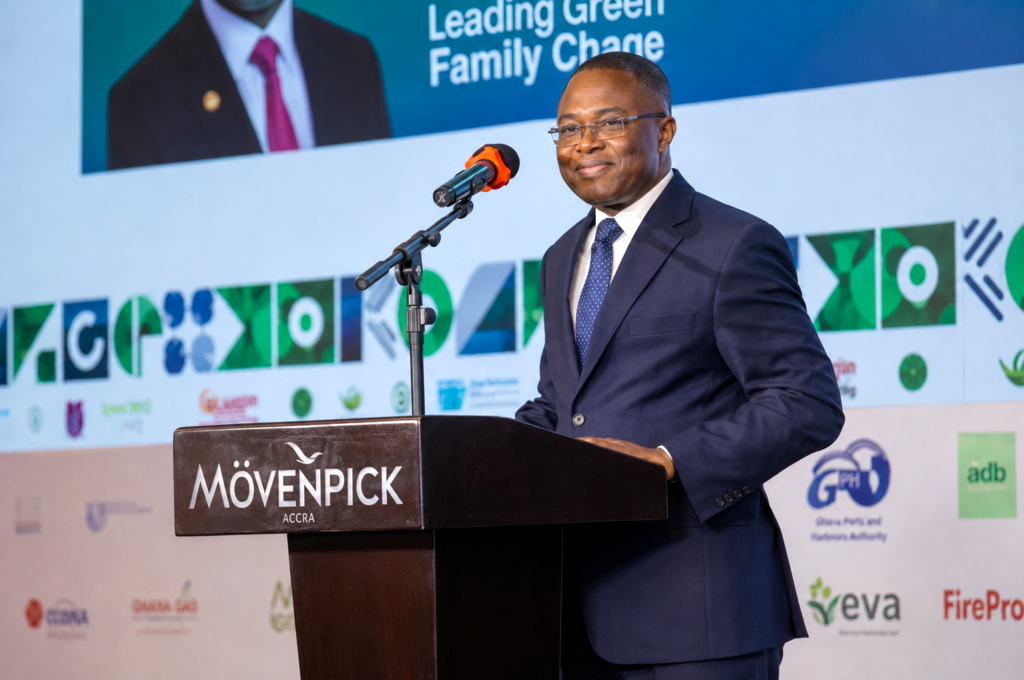
But he didn’t shy away from what’s broken. Agriculture is Ghana’s export powerhouse the trade surplus widened 26% year-on-year to $5.28 billion in April 2026. Yet the sector’s non-performing loan ratio sits at 54.7%. The disconnect is glaring. “There is a fundamental mismatch between where our export strength comes from and where our credit is going,” Gyan said.
The root problem, he explained, boils down to trust, and there are two versions of it. One is structural: credit assessment tools designed for a different economy that render millions of working Ghanaians invisible to banks. The other is historical: Ghana’s 2017/18 banking cleanup and the domestic debt exchange program left deep scars on public confidence. “Building trust, in this environment, is a deliberate project,” Gyan said. “It requires showing up consistently. It requires making decisions that are good for the long term, even when they are harder in the short term.”
He used Fidelity Bank’s own track record as proof that underserved sectors can work. Through the Mastercard Foundation’s BRIDGE-in-Agriculture program, the bank disbursed GH¢66.9 million last year, financing that created 12,912 new jobs, sustained 11,566 existing ones, and reached 22,247 smallholder farmers, 62.4% of them women. The bank’s other initiatives followed a similar pattern: its GreenTech Innovation Challenge awarded GH¢1.02 million in grants to 16 climate-smart businesses in 2025, while the Orange Corners Innovation Fund, backed by the Netherlands, disbursed GH¢9.83 million to over 55 young entrepreneurs in agribusiness, fashion, tech, and creative industries, generating over 1,000 jobs. The Orange Inspire Creative Challenge deployed GHS550,000 in grants and concessionary loans to the creative sector.
“These are small numbers relative to the scale of the problem,” he acknowledged. “But they represent a proof of concept that bankable models exist, and they need to be built and scaled.”
Gyan wrapped up with three concrete asks for the industry. First: governments, development finance institutions, and commercial banks need to co-design a risk-sharing framework for agricultural credit. Second, banks should adopt alternative credit assessment tools that tap into mobile money data, supply chains, and digital transaction histories to uncover creditworthiness that the current system misses. Third: patient capital, like grants, concessionary loans, and blended finance, shouldn’t be treated as charity but as a strategic bet on the sectors that will define Ghana’s economy over the next decade.
“Ghana has done something genuinely hard,” Gyan said. “It came back from the edge. Now the question is what we build with the stability we have earned.”